 English (UK)
 Ελληνικά
- Details
- Written by: Thomas
- Category: Volunteer Blog
- Hits: 335
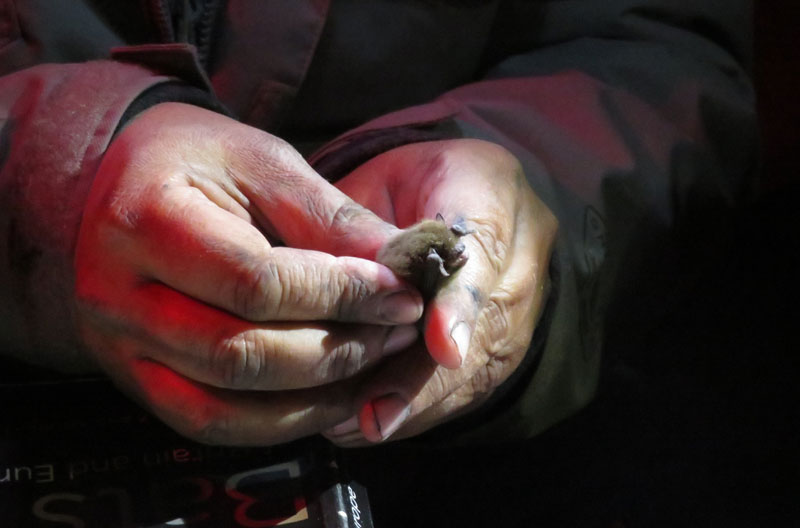
Yes in drasi it is not only birds, we also receive reptiles and mammals. So I’m going to talk to you today about the only mammal flying actively: the bat! A little-known animal that I particularly like. These surprising mammals mostly use echolocation to orient themselves in the dark that acts like whale sonar. They emit ultrasound from the larynx, which is inaudible to humans. But they are not blind! The sounds then meet potential obstacles and prey and “bounce” to the bat indicating all the information needed for a good move and a good hunt.
Bats have a particular life cycle :
- The absence of insects in winter encourages bats to hibernate in roosts with constant temperatures and humidity such as cellars, underground cavities, trees, bridges… During hibernation, bat metabolism slows to the extreme. They are immersed in a deep sleep that will last several months with a few short phases of activity to rehydrate about every 3 weeks. We must be very careful because any sudden awakening can be fatal.
- At the arrival of spring, the bats, thinner, come out of their lethargy, replenish their reserves and join transition lodges. It is also during this period that females will trigger ovulation followed by fertilization and embryo development.
- In summer, the females settle in lodges, in colonies of a few individuals to several thousands, to put down their young and raise it, whether in attics, church steeples… These gatherings can occur between the same species and between several species.
- At the end of the summer, individuals will build up fat reserves to prepare for the hibernation phase. They will also gather in the thousands at intermediate sites to mate. A delayed ovulation then takes place in the female for the majority of species: sperm is stored and kept intact throughout the winter.
Many species are insectivores, so it is an excellent natural insecticide! It can eat 1/3 of its weight in one evening and play an essential role in the balance of natural environments thanks to the regulation of nocturnal insects.
They are very useful and must be protected for the proper functioning of our ecosystems.
- Details
- Written by: Thomas
- Category: Volunteer Blog
- Hits: 372
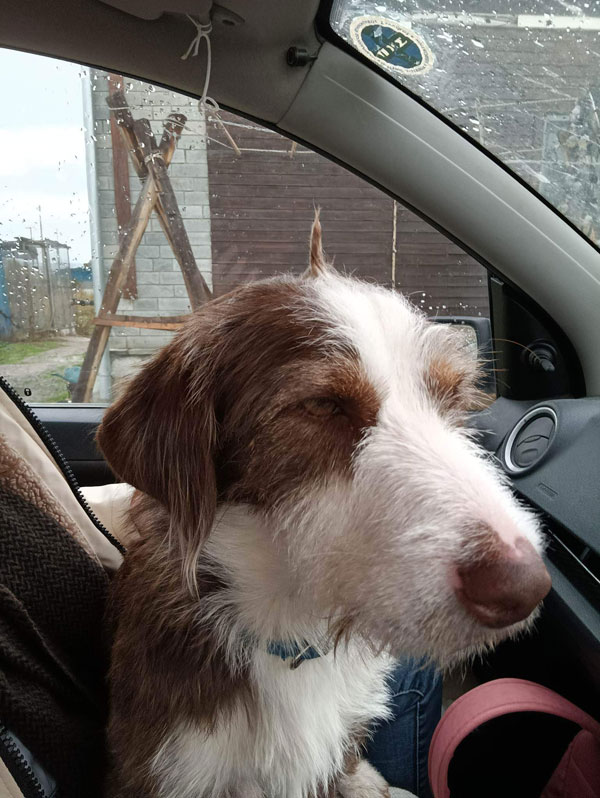
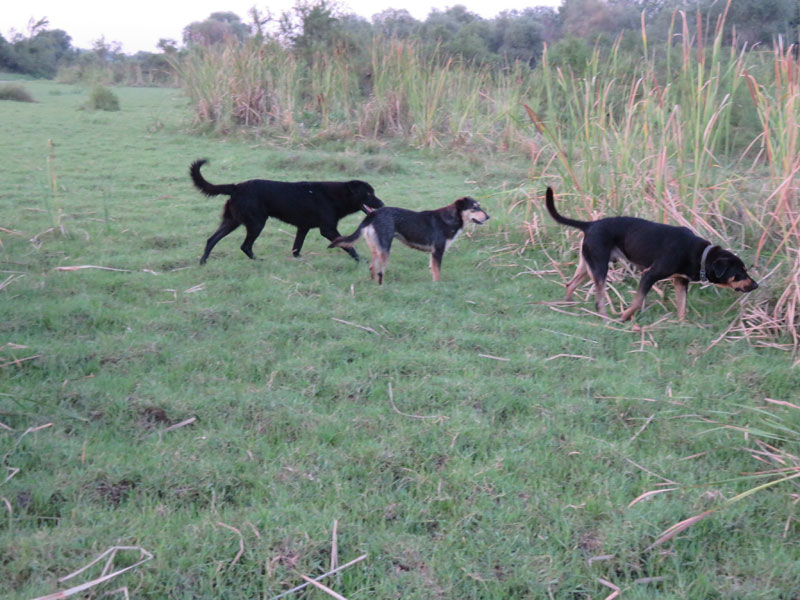
How can we talk about drasi without talking about our beautiful dogs? Indeed, throughout volunteering we share our lives with 3 dogs living there that we feed and cuddle every day.
Let me introduce them to you, at first we have “ Aδύνατος “ or as I like to call it: “Colonel”. A brave dog always in the lead with a proud face, an upright tail and a smile on his face. Very cuddly it makes an excellent companion for walks ( like all our dogs of course).
We then have “Lily” the beautiful and shy dog of the band, we must avoid sudden movements but once she gets to know you she will come to you in an atypical way to look for caresses.
Then we all black the crazed of the group, a young and huge dog with soft hair, always in search of games especially with his best friends MONDY and yes there is a 4th dog that of our incredible veterinarian and director Sophia!
The small and energetic Mondy, my little love dog. Of course he comes back with Sophia in the evening but is often present the days of work and you will love to play with him, it’s a bit like the drasi mascot. It is clearly the most beautiful of all even if most will not agree with me.. I think that what he loves most is to play in the mud and come back dirty so that Sophia washes him… sacred Mondy!
During a good part of my volunteering there was also the hug and protector Rodry, a big dog without a tail who loved to get on her back to receive the love of volunteers but today she lives her life independently of drasi is only passing through, often in the evening.
It’s a brief summary of these adorable dogs but I can talk about it for hours and hours.. hoping that you will have the chance to meet them dear readers..
- Details
- Written by: Thomas
- Category: Volunteer Blog
- Hits: 371
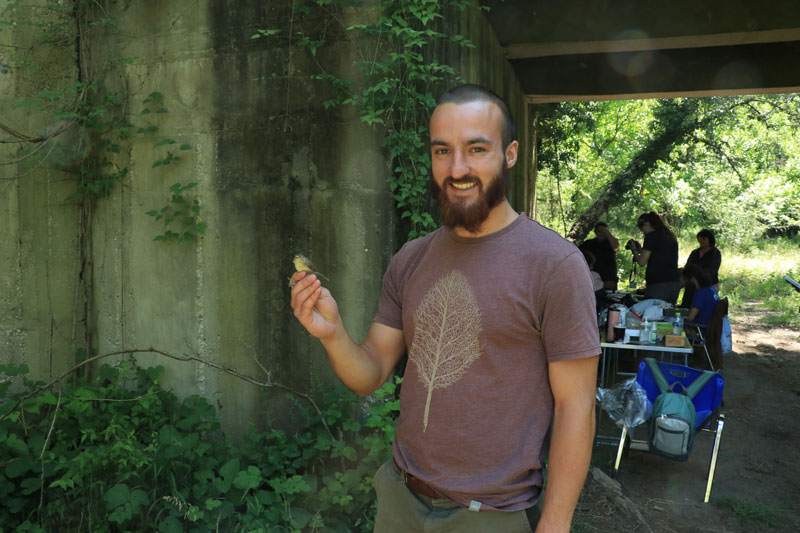
Today I’m going to talk about the ringing session. Thanks to Penelope I was able to attend my first ringing session. A rather eventful start, we start to inspect the places to know where to lay the nets in the kalochori swamp, well fallen we find ourselves stuck in the mud. Then starts a great adventure to get out of it, when one went out another fell and therefore we helped each other and fell one after the other. We had a good laugh in spite of the difficulties. Then we set the nets and waited for the birds to go through there. We had a few birds that day and I learned a lot about ringing methods, how to take measurements, identification… So I was able to release my first owl (athene noctua), it was an incredible moment, I who love nocturnal animals especially birds of prey and bats, I was super happy. Speaking of bats, one of them also got caught in the nets and we were able to identify it and release it, magical..
During another luggage session I was able to take the bird measurements, always under the wise eye of Penelope and Babis, it was very interesting.
\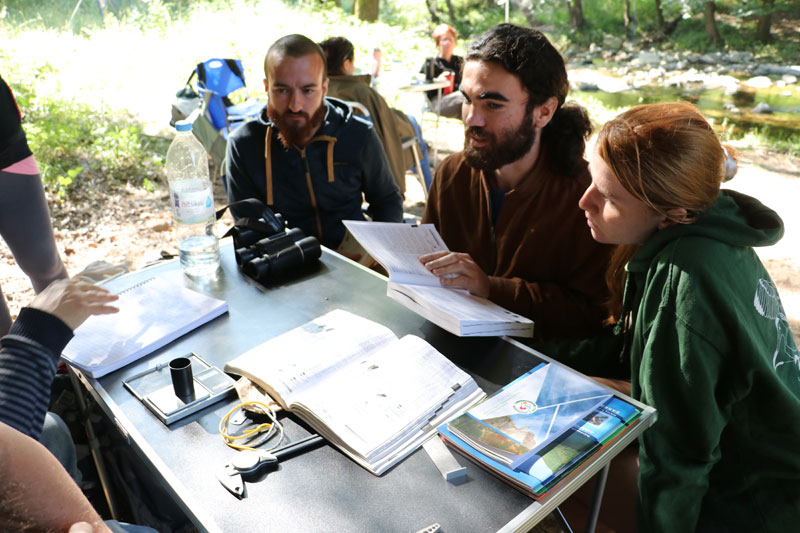
I thus learned to handle small passerines, like the iduna pallida, very beautiful bird that I had never had the chance to observe before not being located in France. It was in an idyllic setting that we made this packing session where we could observe, besides the birds, bats, a squirrel, orchids and mushrooms.
I loved these ringing sessions, it is very interesting and allows to gather a lot of information about the populations. I hope I get a chance to do it again.
- Details
- Written by: Eglantine Bautru-Valois
- Category: Volunteer Blog
- Hits: 354
[EN] As a volunteer, you will sometimes have to face death. It can be quite tough at the beginning, so here are a few tips to overcome it.
Let’s start with data. In 2022, 34% of the animals we welcomed were released. It is great, knowing that they arrive here with a low percentage of survival. Without the help of all the team, they would die anyway. So it’s a chance to fight death we’re giving them !
There are 2 types of death here. First, the natural deaths. Sometimes, the animals die during the transportation, because of the seriousness of their injury. Or they can die at the center, during the rehabilitation process. Indeed, medicine is based on living individuals. It means that you’ll never be able to predict, cure or understand everything. You must accept that, they are things we can’t fight against. In some cases, the vet can decide to euthanize an animal. The reasons are quite diverse. For example, if a bird has a broken wing that can’t be fixed, it means it won’t be able to fly again. As we won’t be able to release it, there is no point keeping it in captivity, where it will be stressed every day. In its interest, the vet will euthanize it.
Finally, some deaths can help serving the cause. Thanks to our work here in Δράση για την Άγρια Ζωή, we raise awareness against hunting for example, by sharing the atrocious damages these activities have on wildlife. This kind of content, illustrated by the journey of the animal, can help make people change their mind.
To conclude, I’d say that as a volunteer, it is your duty to do your best. But to matter how much effort you put in it, happy endings don’t always depend on it. And keep in mind that you’re fighting death and like in every battle, you don’t always win.
[FR] En tant que volontaire, tu devras parfois affronter la mort. Cela peut être un peu compliqué à gérer au début, alors voici quelques conseils pour y faire face.
Tout d’abord, un peu de statistiques. En 2022, 34% des animaux que nous avons reçu ont été relâchés. C’est un résultat très satisfaisant, compte tenu qu’ils arrivent avec de faibles chances de survie. Ce qui est certain, c’est que sans l’aide de toute l’équipe, ils mourraient. Nous leur donnons ici une chance de vaincre la mort !
Il y a 2 types de décès au centre. D’abord, les morts naturelles. Parfois, les animaux meurent pendant le transport, à cause de la sévérité de leurs blessures. Dans d’autres cas, ils meurent lors du processus de réhabilitation. En effet, la médecine est une science du vivant. Cela signifie que l’on ne sera jamais capable de tout prédire, soigner ou comprendre. Il faut accepter cela, il y a des choses contre lesquels on ne peut pas lutter. Dans d’autres cas, la vétérinaire peut décider d’euthanasier l’animal. Les raisons sont assez diverses. Par exemple, un oiseau dont l’aile cassée n’est pas réparable ne pourra plus jamais voler. Ne pouvant pas le relâcher, le garder en captivité n’a plus de sens. Il y vivrait enfermé et stressé, chaque jour. Dans son intérêt, la vétérinaire l’euthanasiera.
Enfin, certaines morts peuvent servir une cause. Grâce à notre travail ici à Δράση για την Άγρια Ζωή, nous sensibilisons le public contre la chasse par exemple, en partageant les conséquences atroces de cette activité sur la faune sauvage. Ce type de contenu, illustré avec le parcours de l’animal, peut aider à faire changer les mentalités.
En conclusion, je dirais qu’en tant que volontaire, c’est ton devoir de faire de ton mieux. Mais qu’importe la volonté que tu y mettras, la fin ne sera pas toujours celle que tu espères. Essaie de garder en tête que tu combats la mort, et que comme dans chaque bataille, ce n’est pas toujours toi qui l’emporte.
- Details
- Written by: Eglantine Bautru-Valois
- Category: Volunteer Blog
- Hits: 603
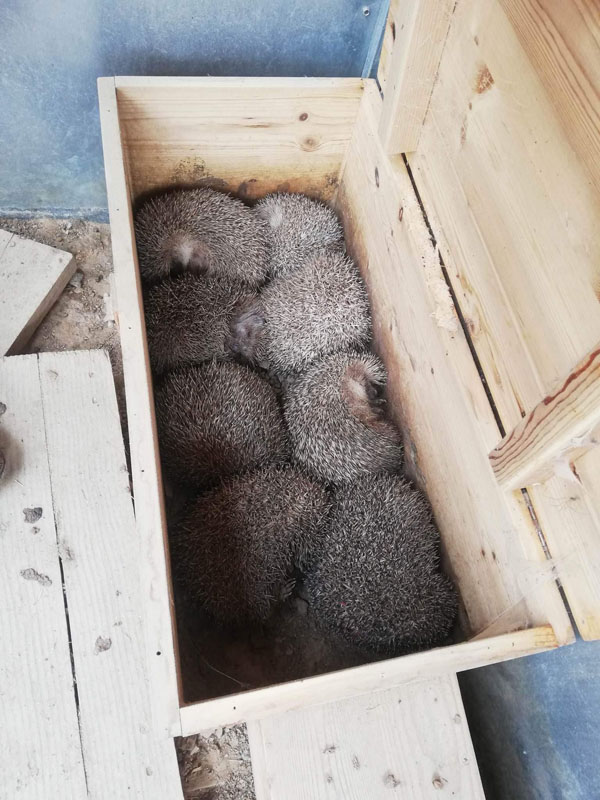
Nous rentrons actuellement dans l’hiver, une période un peu particulière pour certains animaux, qui rentrent en hibernation. Mais comment ce phénomène se produit-il ? Quels mécanismes le permettent ? Dans ce post, nous répondons à toutes vos interrogations !
Tout d’abord, une définition simple. L’hibernation est un état d’hypothermie régulée permettant aux animaux de conserver leur énergie pendant l’hiver. Elle est à ne pas confondre avec l’hivernation, qui traduit davantage un état de somnolence où animal continue de s’alimenter ou de se déplacer.
Mais alors, comment ça se passe ? Les animaux hibernants ralentissent leur métabolisme, c’est-à-dire l’ensemble des transformations chimiques et biologiques de l’organisme, jusqu’à un niveau très bas. Concrètement, ils abaissent leur taux respiratoire et leur température jusqu’à près de 0°C, et puisent le peu d’énergie nécessaire dans leur réserves graisseuses, accumulées pendant les mois actifs. Baissent également le rythme cardiaque, le flux sanguin (sauf au niveau du coeur, du cerveau et du tissu adipeux) ou encore le taux d’hormones de croissance.
Pourquoi l’hibernation est-elle vitale à certains organismes ? Et bien tout comme la migration, c’est une stratégie d’adaptation au froid. Mais elle permet également de survire face à la raréfaction de l’eau et/ou de la nourriture.
Quels animaux hibernent ? Pour faire simple, les animaux qui hibernent sont ceux dont le corps ne produit pas de chaleur suffisante pour survivre aux températures hivernales. Il y a la marmotte, le loir, le hérisson ou encore l’écureuil et la chauve-souris. Mais attention, certains animaux comme l’ours ou le blaireau hivernent mais n’hibernent pas ! Et petit fun fact : une étude de 2022 de la revue scientifique l’Anthropologie émet l’hypothèse que notre ancêtre l’Homme de Néandertal, aurait pu hiberner pour se protéger des températures extrêmes !
Comment sortir de l’hibernation ? Tout simplement par un réchauffement rapide du corps, s’accompagnant entre autres d’une augmentation de la fréquence cardiaque. Et tout est rétabli en quelques heures seulement !